← All postsAnti-aging

Dehydrated Skin vs Ageing Skin: Why Your Skin Looks Less Firm

B

Written by

Beauty Editor

Some of the most visible signs of ageing aren't ageing at all. Dehydrated skin loses elasticity, develops fine lines, and looks less firm in ways that closely mimic structural ageing but respond to entirely different solutions. If you've been treating the wrong cause, this article will reset how you approach it.

5 April 2026·6 min read·
Dehydrated Skin vs Ageing Skin: Why Your Skin Looks Less Firm

Not sure your skin type? Take our free 2-minute quiz.

Start quiz →

Why Your Skin May Look Less Firm Even If You’re Not Ageing

Some of the most visible signs of ageing aren't ageing at all. Dehydrated skin loses elasticity, develops fine lines, and looks less firm in ways that closely mimic structural ageing but respond to entirely different solutions. If you've been treating the wrong cause, this article will reset how you approach it.

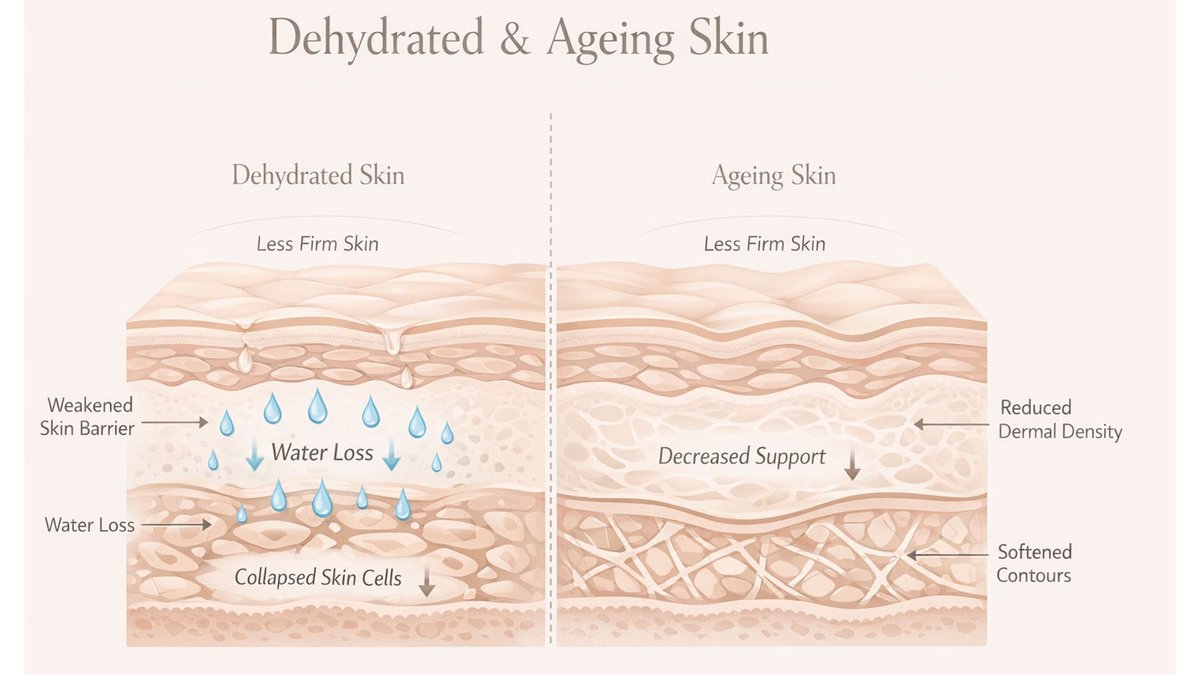
A common misconception in skincare is that loss of firmness always means ageing. From a clinical perspective, many people experiencing dull, slightly sagging, or less resilient skin are not dealing with structural ageing, but dehydration and reduced skin barrier function.

This distinction is critical. Misidentifying the cause often leads to routines that unintentionally stress the skin, making it appear less firm over time.

While ageing is a gradual biological process, dehydration reflects how well your skin is functioning today and in many cases, it is a reversible condition.


What Is Dehydrated Skin and How Does It Affect Firmness?

Dehydrated skin refers to a lack of water within the skin, not oil. It can affect all skin types, including oily and breakout-prone skin.

When hydration levels are low, the skin loses its ability to maintain volume and smoothness. This often presents as:

  • A slightly crepey or flattened appearance
  • Reduced bounce and elasticity
  • Fine lines that appear more visible

Rather than being a fixed condition, dehydration reflects how effectively the skin maintains hydration and barrier stability.

In Korean skincare, this is addressed through layered hydration strategies, using ingredients such as multi-weight hyaluronic acid and panthenol to support moisture retention and overall skin comfort.


What Is Ageing Skin and Why Does Firmness Change Over Time?

Ageing skin involves gradual structural changes that occur over time, including:

  • Reduced skin density
  • Slower renewal processes
  • Changes in elasticity and resilience

Unlike dehydration, these changes are progressive. However, the appearance of ageing skin can be supported through consistent routines that prioritise hydration, skin barrier support, and ingredient compatibility.

Ingredients such as peptides and PDRN are commonly used in Korean skincare formulations to support firmer-looking, more resilient skin over time.
CUSKIN

Dr.Solution PDRN Bakuchiol Ampoule 35ml

$78.00 AUD

Shop →

Why Dehydration Is One of the Most Overlooked Saggy Skin Causes

One of the most overlooked saggy skin causes is chronic dehydration.

When the skin lacks sufficient water:

  • It loses visible volume
  • Surface texture becomes uneven
  • The skin appears less lifted and more fatigued

This creates the appearance of sagging, even when the underlying structure has not significantly changed.

In clinical settings, restoring hydration is often one of the first steps in improving how firm the skin appears particularly when dehydration is the primary contributor.

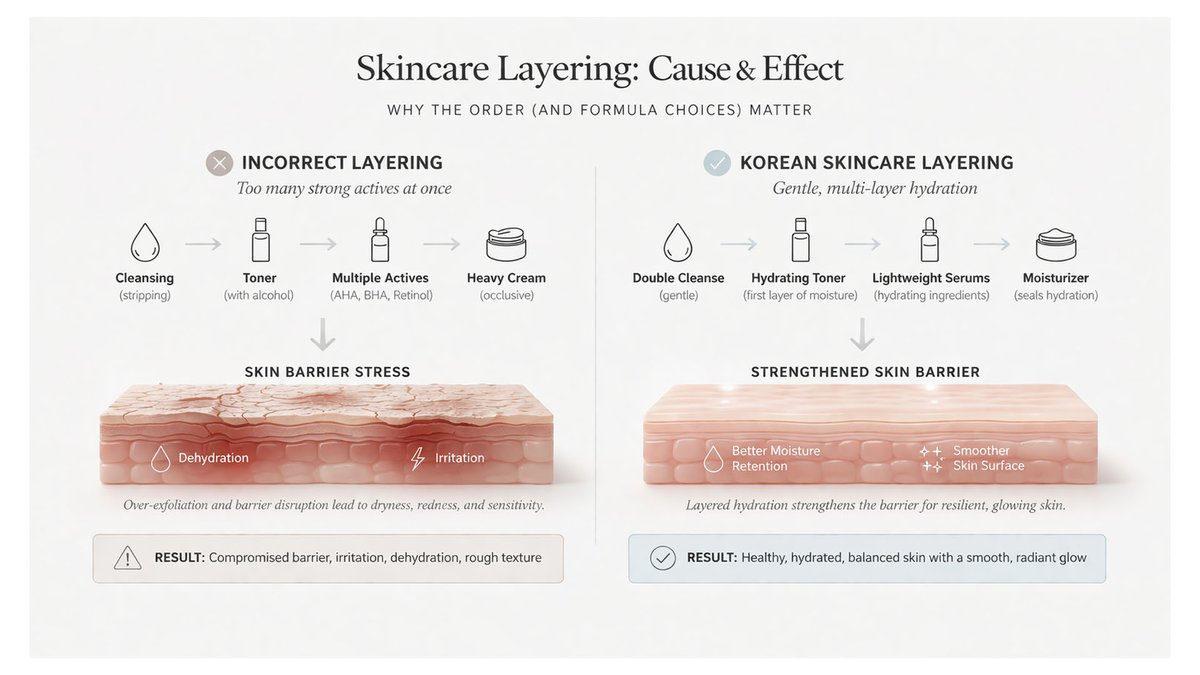
This is why Korean skincare focuses on multi-layer hydration, rather than relying on a single heavy product.

---

The Role of Skin Barrier Repair in Maintaining Firmness

Hydration and firmness are closely linked to the skin barrier.

When the barrier is compromised, the skin struggles to retain moisture. Over time, this contributes to:

  • Increased water loss
  • Reduced resilience
  • A thinner, less supported appearance

Korean skincare ingredients such as ceramides, panthenol, and Centella Asiatica are widely used to support the skin barrier function and maintain stability.

In professional Korean skincare such as CUSKIN, barrier-first formulations are often prioritised before introducing more targeted actives, ensuring the skin remains balanced and responsive.

https://kbeautyau.com/blog/why-is-my-skin-getting-more-sensitive-over-exfoliation-your-skin-barrier


Korean Skincare Philosophy: Supporting Function Before Correction

Korean skincare does not approach firmness as something to aggressively fix. Instead, it focuses on improving overall skin function so the skin can appear naturally more resilient.

This approach is built on:

  • Supporting the skin barrier first
  • Maintaining hydration across multiple layers
  • Using low-irritation actives consistently

This is why Korean skincare ingredients are designed to work together, allowing the skin to gradually rebuild stability rather than being pushed into short-term results.\

CUSKIN

Hyaluronic 15 Serum 30ml

$84.00 AUD

Shop →

How to Combine Korean Skincare Ingredients Without Overloading the Skin

A key difference in Korean skincare is how ingredients are combined.

Rather than layering multiple strong actives at once, the focus is on:

  • Compatibility over intensity
  • Supporting hydration alongside actives
  • Building results gradually

For example:

  • Hyaluronic acid + panthenol → supports hydration and moisture retention
  • Ceramides + Centella Asiatica → supports barrier stability and skin comfort
  • Peptides + niacinamide → supports smoother, more refined-looking skin

This layering approach is commonly used in professional Korean skincare protocols, where maintaining skin tolerance is essential for consistent outcomes.

These ingredients are often delivered through lightweight, layerable textures allowing the skin to gradually rebuild resilience without being overwhelmed.


How to Tell the Difference Between Dehydrated and Ageing Skin

These two conditions often overlap, but there are key differences.

Dehydrated skin typically:

  • Feels tight but not necessarily dry
  • Shows fine lines that improve with hydration
  • Appears dull or slightly uneven

Ageing skin typically:

  • Shows more persistent changes in elasticity
  • Has gradual, long-term structural changes
  • Is less responsive to short-term hydration alone

In many cases, both factors are present which is why a balanced, layered routine is essential.

K-Beauty tips in your inbox

Get personalised skincare advice

Join 500+ Australians who get weekly K-beauty routines and product picks.

Take the Skin Quiz →

CUSKIN

pH Balancing Toner 200ml

$60.00 AUD

Shop →

Why Clinics Focus on Hydration Before Anti-Ageing Treatments

In clinical practice, hydration and barrier stability are prioritised before introducing more intensive treatments.

Dehydrated or compromised skin tends to respond less predictably and may become more reactive under stress.

This is why many clinics adopt hydration-first protocols, often incorporating professional Korean skincare, where formulations are designed to layer effectively without overwhelming the skin.

This approach allows for:

  • More consistent treatment outcomes
  • Better skin tolerance
  • Improved overall skin resilience

Building a Routine That Supports Firmness

A Korean skincare routine focuses on consistency rather than intensity.

In the morning, hydration and protection are prioritised through lightweight layers and daily SPF.

In the evening, gentle renewal is introduced using mild exfoliants such as PHA or LHA occasionally, alongside restorative ingredients that support the skin overnight.

Rotation not overload is key to maintaining long-term skin stability.


Final Thoughts: Know Your Skin Before You Treat It

Not all loss of firmness is a sign of ageing in many cases, it reflects how well the skin is functioning.

Dehydrated skin can make the skin appear less firm, less smooth, and more fatigued, even when structural ageing is minimal.

By focusing on hydration, skin barrier repair, and ingredient compatibility, the skin can appear noticeably more resilient over time.

For a deeper understanding of how multiple factors contribute to skin laxity, explore our guide on saggy skin causes and how Korean skincare ingredients support long-term skin health.

Ready to start? Explore the CUSKIN range at kbeautyau.com and find the right hydration-first routine for your skin.

Exclusive CUSKIN Distributor

Shop CUSKIN Australia

Korean derma-cosmetics shipped from Melbourne

Browse Products →
B

Written by

Beauty Editor

I’m a clinical aesthetic consultant with a deep focus on Korean skincare formulation and treatment protocols. My approach is rooted in barrier-first skin health, where ingredient synergy and long-term skin resilience matter more than quick fixes. Through this platform, I share insights drawn from clinic-based skincare, translating complex K-beauty principles into routines that are both effective and sustainable. My goal is to help you understand not just what to use, but why it works so you can make more confident, informed decisions about your skin.

Comments

Loading comments…

Leave a comment

Share this post

Free · 2 minutes

What does your skin need?

Get a personalised K-beauty routine sent to your inbox.

Take the free quiz →