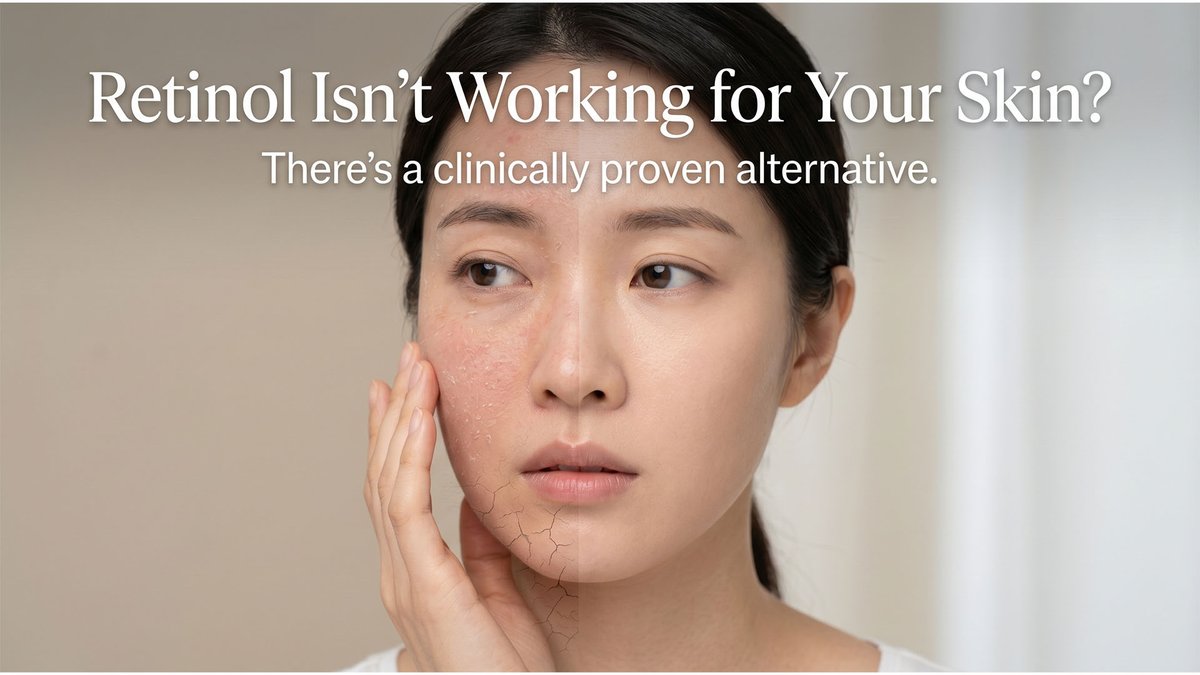
Bakuchiol: The Korean Retinol Alternative for Sensitive Skin
Retinol has long been held up as the gold standard in anti-ageing skincare, but for sensitive skin it can do more harm than good. Korean dermatology has quietly championed bakuchiol as a gentler, clinically relevant alternative and the science behind it is more compelling than many expect.
What Is Bakuchiol?
There is a particular frustration that many people know well. You invest in a retinol product because every article, every aesthetician, and every beauty editor seems to agree that it is the ingredient for anti-ageing. You use it consistently, as instructed. And within days, your skin is red, flaking, and more reactive than it was before you started. You push through, hoping your skin will adjust. Often, it doesn't quite get there or it does, only to have the sensitivity return with any life disruption: stress, sun, a missed night of sleep.
Bakuchiol is an ingredient that Korean dermatologists have been reaching for precisely because this scenario is so common. Extracted from the seeds and leaves of the Psoralea corylifolia plant (known as babchi), bakuchiol is a naturally derived compound that has been used in traditional Ayurvedic and Chinese medicine for centuries. In its modern clinical context, it has been studied extensively for its ability to support firmer-looking skin, improve the appearance of fine lines, and promote a more even skin tone without the irritation profile that makes conventional retinol inaccessible to so many.
This article unpacks what bakuchiol actually does in the skin, why the Korean clinical approach to using it produces such consistent results, and what to look for when choosing a formulation that works as part of both a daily routine and a professional treatment protocol.
The Korean Clinical Philosophy Behind Bakuchiol
Korean dermatology operates from a philosophy that is worth understanding before considering any single ingredient. Where much of Western anti-ageing skincare has historically favoured aggressive actives, high-strength retinoids, intense exfoliation, rapid cell turnover — Korean clinical practice places barrier integrity at the centre of every protocol. The skin is treated as an ecosystem that must be supported, not pushed into compliance.
This is not a conservative approach, nor a less effective one. It reflects decades of clinical observation showing that a healthy, intact skin barrier responds better to active ingredients, retains the results of professional treatments for longer, and ages more gracefully over time. An irritated, compromised barrier, by contrast, is more reactive, less able to retain moisture, and more susceptible to environmental damage — none of which supports long-term skin health.
Bakuchiol fits this philosophy precisely. It offers meaningful anti-ageing activity without triggering the barrier disruption that retinol so frequently causes. For Korean skin clinics working with clients who have reactive, post-procedure, or otherwise sensitive skin, this makes it a strategic choice: the results are clinically relevant, and the recovery burden on the skin is minimal.
How Bakuchiol Works in the Skin
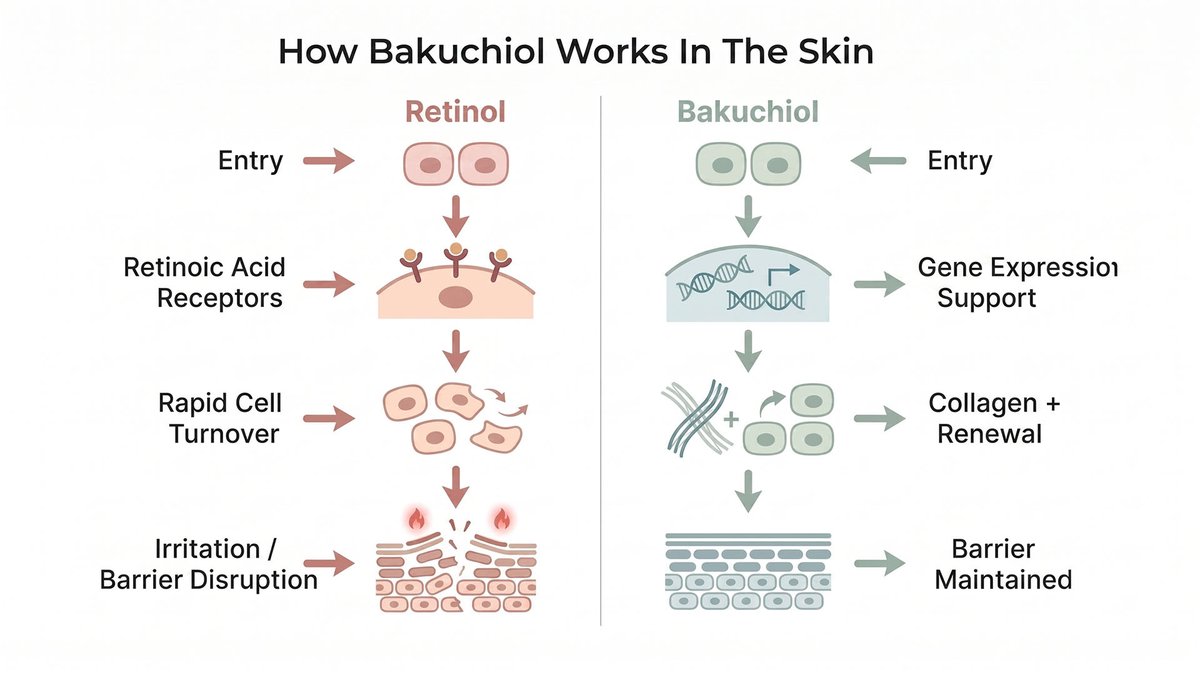
The reason bakuchiol attracts serious clinical attention is not simply that it is "gentle". It is that it appears to interact with the same cellular pathways that retinol acts on, while doing so without the characteristic side effects.
Retinol works by binding to retinoic acid receptors in the skin, triggering a cascade that includes accelerated cell turnover, increased collagen synthesis, and improved pigmentation regulation. This mechanism is effective, but the speed and intensity of the process is also what causes the peeling, sensitivity, and photosensitivity commonly associated with retinoid use. Bakuchiol has been observed in published clinical research to support similar gene expression in skin cells, including genes associated with collagen production and the regulation of skin renewal processes, but through a functionally different mechanism that does not depend on direct retinoic acid receptor binding.
In practical terms, this means bakuchiol supports firmer-looking skin and helps improve the appearance of fine lines and uneven skin tone, without triggering the disruption to the stratum corneum that makes retinol difficult for sensitive skin types to tolerate. It is also notably stable in daylight, which makes it compatible with morning as well as evening use, a meaningful advantage for clients in Australia, where sun exposure is a daily consideration in any skincare protocol.
Bakuchiol also carries antioxidant and soothing properties, which further support skin barrier function rather than working against it. In formulations that also include hyaluronic acid, PDRN, or ceramides, its activity becomes part of a layered approach to skin renewal that addresses multiple concerns simultaneously.
 ---
---
Bakuchiol and PDRN: A Layered Anti-Ageing Pairing
In Korean professional skincare, bakuchiol is rarely used in isolation. The most clinically considered approach pairs it with ingredients that target complementary aspects of skin ageing, creating a protocol where each layer of actives supports the work of the others.
PDRN (polydeoxyribonucleotide), derived from salmon DNA, has become one of the most respected ingredients in Korean aesthetic medicine. Originally used in injectable form in clinical settings, it is now formulated into topical ampoules where it supports the skin's natural renewal processes and helps improve the appearance of damaged, fatigued, or post-procedure skin. When paired with bakuchiol, PDRN addresses skin recovery and tissue support, while bakuchiol contributes to firmer-looking skin and improved surface renewal without the need for more disruptive actives.
This combination is particularly well suited to Australian skin in clinic contexts. Clients who are recovering from laser, microneedling, or other resurfacing procedures often cannot tolerate conventional retinol during or immediately after treatment. Bakuchiol and PDRN together provide a protocol that continues to support skin improvement throughout the recovery period, extending the value of professional treatments without introducing unnecessary irritation risk.
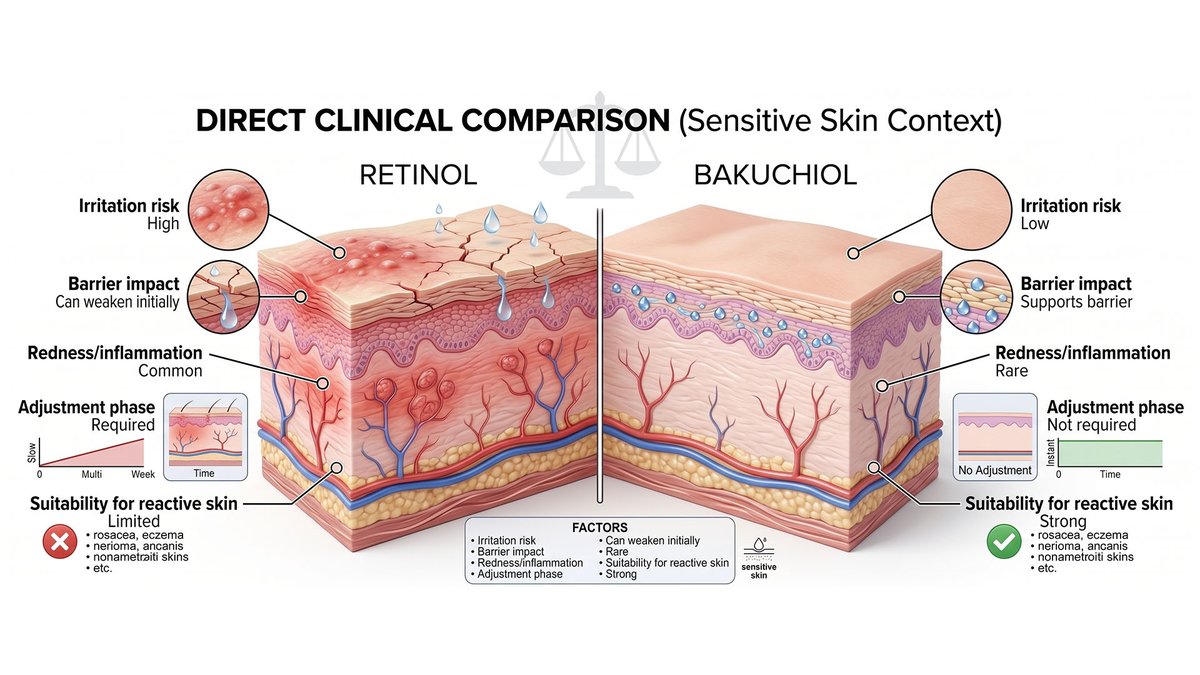 The most obvious answer is anyone who has tried retinol and found it too irritating. But bakuchiol's suitability extends well beyond that group, and understanding who benefits most helps clarify why it has earned such consistent clinical endorsement.