← All postsSensitive

Your Shampoo Might Be Undoing Your Skin Barrier Repair

B

Written by

Beauty Editor

Your scalp is skin. It has a barrier, a microbiome, and a pH level that needs protecting, just like your face. If your shampoo contains the wrong ingredients, it may be quietly undoing every barrier-repair product in your routine. Here is what to look for, what to avoid, and what actually supports the skin on top of your head.

19 April 2026·11 min read·
Your Shampoo Might Be Undoing Your Skin Barrier Repair

Not sure your skin type? Take our free 2-minute quiz.

Start quiz →

You're Repairing Your Skin Barrier. Your Shampoo Might Be Undoing It.

Your scalp is skin. It has a barrier, a microbiome, and a pH level that needs protecting, just like your face. If your shampoo contains the wrong ingredients, it may be quietly undoing every barrier-repair product in your routine. Here is what to look for, what to avoid, and what actually supports the skin on top of your head.


Your Scalp Is Skin. Start There.

Most people have a skincare routine for their face. Cleanser, treatment, moisturiser, SPF. The logic behind it, protecting the skin barrier, managing hydration, addressing specific concerns, is well understood. What most people do not apply that same logic to is the skin on top of their head.

The scalp is not a different category of tissue. It is skin. It has the same stratified epidermis as your face, the same skin barrier structure, the same microbiome, and the same vulnerability to disruption. The difference is that the scalp is washed with surfactant-based products, often daily, that facial skin almost never encounters. And unlike facial skin, which most people would never cleanse with a harsh, alkaline formula and then leave to its own devices, the scalp is routinely treated with exactly that.

The result is a skin barrier that is chronically compromised in a way that goes unrecognised, because we think of our hair and our skin as separate concerns. They are not. And once you understand that, the contradiction in most people's routines becomes very clear: carefully repairing the facial barrier with one hand while dismantling the scalp barrier with the other.


What the Scalp Barrier Actually Does

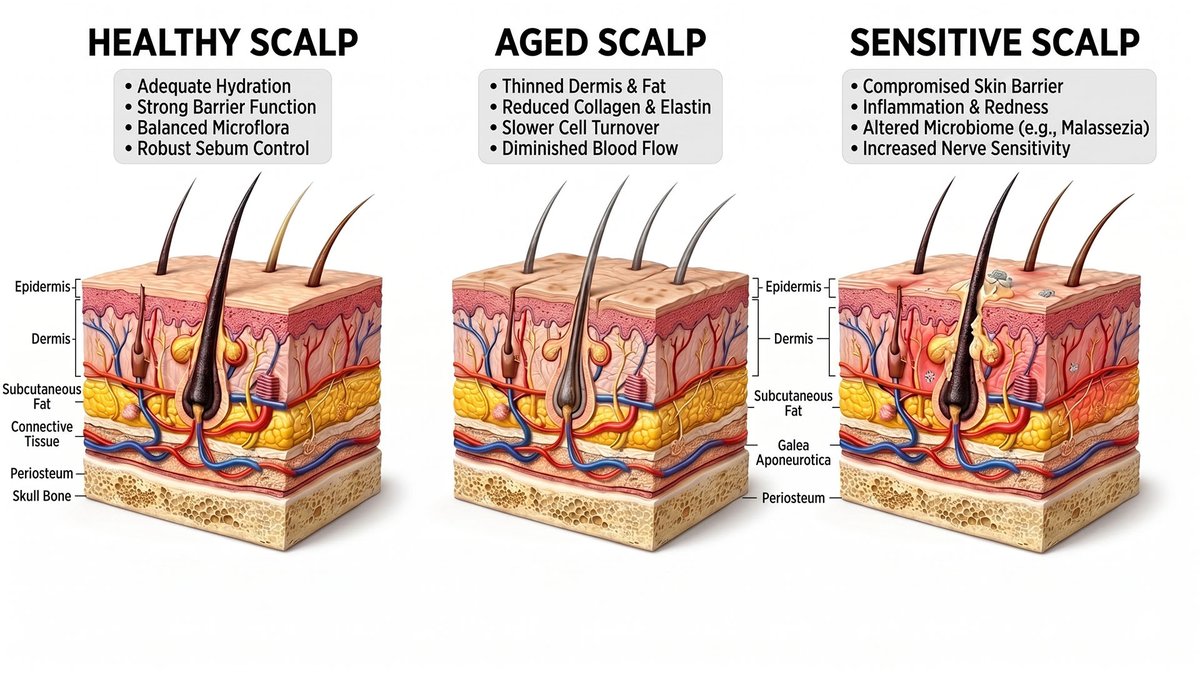
The skin barrier, known clinically as the stratum corneum, is the outermost layer of the epidermis. Its function is to keep moisture inside the skin and keep environmental irritants, microbes, and pollutants out. It achieves this through a tightly organised lipid matrix, a stable slightly acidic pH, and a balanced microbiome that forms part of its first line of defence.

When any of these elements is disrupted, the barrier becomes permeable. Moisture escapes. Irritants penetrate more easily. The skin becomes reactive, tight, or inflamed, not because it has a chronic condition, but because its protective function has been compromised.

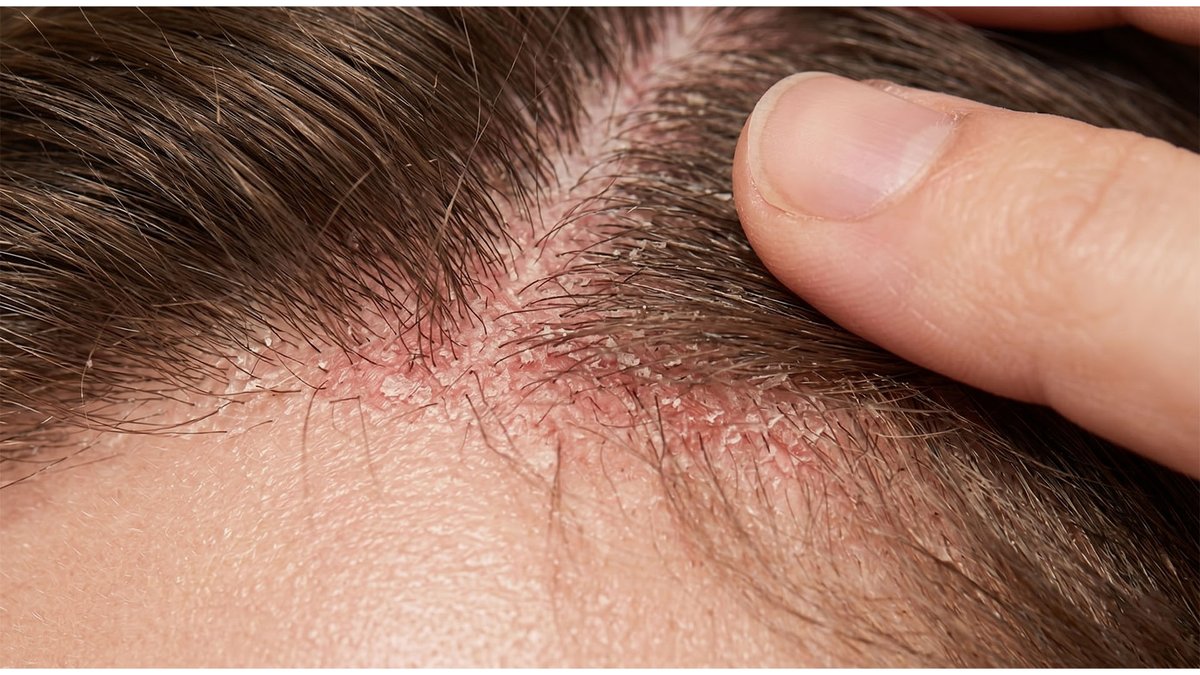
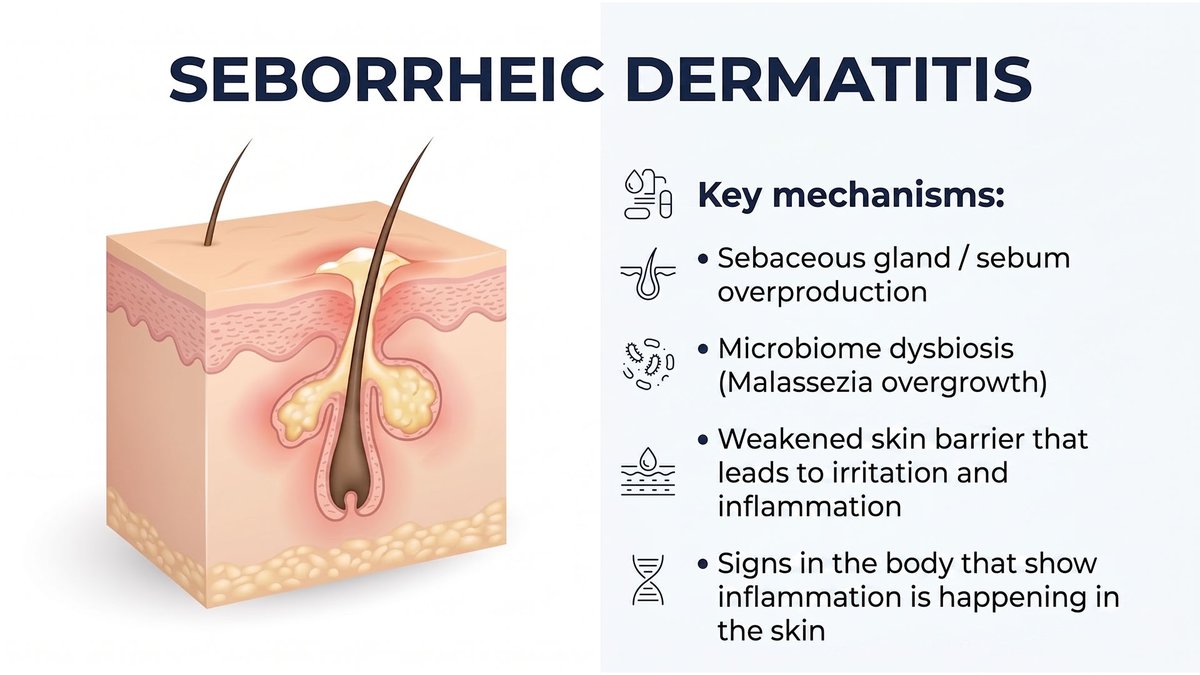
On the scalp specifically, a disrupted barrier presents as dryness, itching, tightness after washing, flaking, or sensitivity and redness that seems persistent regardless of what products are used. These are not always signs of dandruff, seborrhoeic dermatitis, or a scalp condition requiring medical treatment. They are frequently signs of a barrier that has been consistently undermined by the shampoo formulation being used to clean it. The distinction matters, because the solution in that case is not a medicated shampoo. It is a better one.

What Your Shampoo Label Is Telling You (If You Know How to Read It)

This is the section most articles skip. Understanding the science of the scalp barrier is useful. Knowing exactly what to look for and avoid on a product label is what makes it actionable.

Sulphates: the barrier-stripping cleansers

Sulphates are surfactants added to shampoos to create lather and remove oil and build-up from the hair and scalp. They are effective at cleaning. They are also highly effective at stripping the lipid matrix that holds the skin barrier together. The most common ones to look for on a label are Sodium Lauryl Sulphate, often listed as SLS, and Sodium Laureth Sulphate, listed as SLES. A gentler alternative, Sodium Lauroyl Sarcosinate or Cocamidopropyl Betaine, appears in lower-irritation formulations and is worth looking for as a replacement. If SLS or SLES appears in the first four ingredients on a label, it is the dominant cleansing agent and the barrier impact will be significant with regular use.

Silicones: the invisible build-up problem

Silicones are added to shampoos and conditioners to make hair feel smooth and appear shiny. They are not water-soluble, which means they do not fully rinse away. Over time they accumulate on the scalp surface, creating a film that blocks the follicle opening, interferes with the scalp's natural sebum regulation, and prevents any active ingredients applied afterwards from penetrating properly. On a label, silicones appear as any ingredient ending in -cone, -conol, -siloxane, or -xane. The most common are Dimethicone, Cyclomethicone, Amodimethicone, and Cyclopentasiloxane. A silicon-free formulation will not list any of these.

Alkaline pH: the microbiome disruptor

The scalp's natural pH sits between 4.5 and 5.5, a mildly acidic environment that supports the acid mantle and the microbiome living within it. Many conventional shampoos have a pH closer to seven or above, which is alkaline relative to the scalp's natural state. Regular use of an alkaline shampoo shifts the scalp environment away from its optimal pH, disrupts the microbial balance, and weakens the acid mantle that forms part of the barrier's protective function. Products labelled as low-pH or pH-balanced for scalp health, and those that have been tested against a dermatology standard such as EWG Green certification, are formulated to cleanse without creating this shift.

Parabens and synthetic fragrance

Parabens, listed as Methylparaben, Propylparaben, Butylparaben, or Ethylparaben, are preservatives that have known sensitising potential, particularly on an already compromised barrier. Synthetic fragrance, listed simply as Parfum or Fragrance on a label, is one of the most common causes of scalp contact dermatitis and is worth avoiding on a sensitised or reactive scalp. Neither ingredient performs a function that cannot be achieved with safer alternatives in a well-formulated product.

https://kbeautyau.com/blog/why-women-lose-hair-and-what-actually-works


Key Ingredients That Support the Scalp Barrier

Once the disruptive ingredients are removed from the equation, the question becomes what to look for in their place.

Ceramides are the lipids that hold the skin barrier together. The barrier naturally contains ceramides at significant concentration, and when cleansing depletes them, barrier integrity degrades. A shampoo or scalp treatment that contains ceramides, listed on labels as Ceramide NP, Ceramide AP, Ceramide EOP, or simply Ceramide, helps replenish what cleansing removes and supports the barrier's structural cohesion over time.

Panthenol, the stable form of Vitamin B5, is one of the most effective and well-tolerated barrier-supporting ingredients available in topical skincare. It helps the skin retain moisture, supports the appearance of calm in sensitised or reactive skin, and is appropriate for use on compromised, post- procedure, or hormonally disrupted scalps without irritation risk. On a label it appears as Panthenol or D-Panthenol.

Hyaluronic Acid at multiple molecular weights is the standard for professional-grade scalp and skin hydration. High molecular weight Hyaluronic Acid, listed as Sodium Hyaluronate, sits at the surface and supports moisture retention between washes. Lower molecular weight forms penetrate more deeply and support hydration closer to the follicular level. A formulation containing both delivers more sustained and comprehensive hydration than a single-weight ingredient can provide.

Copper Tripeptide-1, listed on labels as Copper Tripeptide-1 or AHK-Cu, supports the extracellular matrix in the scalp and helps maintain the structural environment in which both follicles and barrier function operate. It is one of the few peptide actives with US and European patent backing, and its inclusion in a barrier-focused scalp product reflects a formulation philosophy built on clinical evidence rather than trend.
CUSKIN

Peptino Shampoo

$55.00 AUD

Shop →

By Skin Concern

Ageing Skin. Ceramide production declines naturally with age, which means the scalp barrier becomes progressively more vulnerable to disruption without active support. A scalp showing increased dryness, texture change, or reactivity in later decades is frequently experiencing ceramide depletion as a contributing factor. A low-pH, ceramide-containing cleanser used consistently is one of the most impactful changes an older client can make to both scalp health and the condition of the skin at the hairline and temples.

Sensitive and Reactive Scalp. Chronic scalp sensitivity is rarely a fixed characteristic. In most cases it is a consequence of ongoing barrier disruption that has never been addressed at the source. Guaiazulene and botanical soothing complexes within a ceramide and panthenol base help calm the appearance of redness and support barrier recovery without introducing the reactivity risk of high-active formulations. Switching the cleanser is often where the improvement begins.

Post-Treatment Recovery. The scalp following micro-needling, injectable treatment, or laser work requires the same post-procedure barrier logic applied to facial skin after the same interventions. PDRN supports the skin's natural renewal process. Panthenol and multi-weight Hyaluronic Acid provide hydration and comfort during the days immediately following treatment. The cleanser used in this recovery window should be sulphate-free and silicon-free as a minimum requirement.

Dull and Fatigued Skin at the Hairline. The hairline and temples are often the first place a compromised scalp barrier becomes visible on the face. Persistent dryness, dullness, or sensitivity in this zone that does not resolve with facial moisturiser is worth investigating at the scalp level. In many cases, improving the scalp barrier resolves the facial presentation without any change to the facial skincare routine.


In the Clinic: The Conversation That Changes Everything

For clinic owners and skin therapists, the scalp barrier conversation is one of the most useful tools available for deepening client trust and extending the value of every treatment.

Most clients arriving for facial skin treatments have never been told that their scalp is skin. They do not know it has a barrier. They have not considered that the shampoo they use daily might be creating the sensitivity or reactivity they are paying to have treated. Opening that conversation, calmly and with clear explanation, positions the clinic as a genuinely expert partner in the client's skin health rather than a provider of isolated treatments.

The clinical logic to communicate is straightforward. The scalp and the face share a continuous skin surface. The forehead, temples, and hairline are directly connected to the scalp, and barrier disruption at the scalp level influences the skin quality in those adjacent zones. A client investing in facial barrier repair while using a sulphate-heavy or silicon-laden shampoo daily is working against their own results. Scalp microscopy, where available, makes this visible and immediate. Showing a client the condition of their scalp under magnification, and explaining what they are looking at, is one of the most effective educational moments a clinic can offer.

From a treatment protocol perspective, this means that the between-appointment maintenance conversation should always include a question about what the client is using on their scalp. A client whose barrier is being disrupted by their daily cleansing routine arrives to each appointment starting from a more compromised baseline. The maintenance products recommended after a treatment should include the scalp, not just the face. For clinics working with a professional Korean derma-cosmetic range, this creates a natural and credible extension of the treatment recommendation into scalp-specific retail, built on the same ingredient logic the client already trusts from their facial treatment experience.


Routine Building the Korean Way

Morning

On wash days, use a low-pH, sulphate-free, silicon-free shampoo. Apply to a wet scalp and work it in with fingertip compression movements that move the scalp over the skull rather than simply lathering through the hair. Allow the formula to sit for two minutes before rinsing thoroughly with lukewarm water. Hot water disrupts the lipid matrix of the barrier in the same way it does on facial skin and is worth avoiding. On non-wash days, a two-minute scalp massage without product supports microcirculation without introducing barrier disruption. Apply SPF to any exposed scalp or hairline skin daily. Australian UV conditions make this necessary, not optional.

Evening

Apply a barrier-supportive scalp or skin treatment as the final step of the evening routine, working it into the scalp in sections for direct contact. The evening application window aligns with the skin's natural overnight repair cycle, which is the more effective timing for ingredients supporting cellular renewal and barrier restoration. Consistency across six to eight weeks is where this kind of protocol produces results that hold. The scalp barrier, like the facial barrier, does not repair in days. It rebuilds progressively in a stable, non-disruptive environment.

https://kbeautyau.com/blog/hair-loss-injections-evidence-australia


The Bottom Line

The scalp is skin. It has always been skin. It simply has not been treated as skin by the products designed for it, and most people have not been given the information to know the difference.

For consumers, the shift starts with the label. Checking a shampoo for SLS, SLES, Dimethicone, and Parfum takes less than a minute and changes what the scalp is exposed to every wash day. A low-pH, silicon-free, sulphate-free cleanser formulated with barrier-supporting actives is not a luxury product. It is the baseline that makes every other step in a scalp and skin routine actually work.

For clinic owners, this is the conversation that reframes the client relationship. When a client understands that their scalp and their face are part of the same system, and that the clinic is thinking about both, the treatment becomes more coherent and the maintenance recommendation becomes more relevant. That level of joined-up thinking is what separates a clinical skin expert from a service provider, and it begins with something as simple as asking what shampoo your client uses.

K-Beauty tips in your inbox

Get personalised skincare advice

Join 500+ Australians who get weekly K-beauty routines and product picks.

Take the Skin Quiz →

CUSKIN

Peptino Shampoo

$55.00 AUD

Shop →

Exclusive CUSKIN Distributor

Shop CUSKIN Australia

Korean derma-cosmetics shipped from Melbourne

Browse Products →
B

Written by

Beauty Editor

I’m a clinical aesthetic consultant with a deep focus on Korean skincare formulation and treatment protocols. My approach is rooted in barrier-first skin health, where ingredient synergy and long-term skin resilience matter more than quick fixes. Through this platform, I share insights drawn from clinic-based skincare, translating complex K-beauty principles into routines that are both effective and sustainable. My goal is to help you understand not just what to use, but why it works so you can make more confident, informed decisions about your skin.

Comments

Loading comments…

Leave a comment

Share this post

Free · 2 minutes

What does your skin need?

Get a personalised K-beauty routine sent to your inbox.

Take the free quiz →